I write this post mainly to remind myself the things I already know, to remind myself the paths to sainthood.
The stages of spiritual development come in varying degrees. Some are more significant than others, and some are more difficult to achieve than others. Many masters have described what I described better than I ever will, but I aim to describe the stages in light of mine own observations and experiences.
The stages are:
1) Belief
2) Perception
3) Adherence to Doctrine
4) Self-Mortification
5) Mystical Unity
Sunday, December 31, 2017

First Stage of Spiritual Development: Belief
The first stage of spiritual development is belief. Without belief, an individual cannot be a religious person to begin with for faith - a mode of believing - is central to all religions. It goes without saying that belief is a necessary part of spirituality.
Belief in a religious context is more often called faith. Epistemically, all perception and belief in them come from faith. One must have faith - belief in something that empirically cannot be proven - that one's perception is reliable, that one's perception is not a merely a product of brain in a vat. Yet our vernacular gives the word "faith" almost specifically to religious and spiritual beliefs.
St. Thomas Aquinas classifies faith as a virtue (Summa Q55A1). Virtue is a disposition or a sort of habit. Virtue, while it is a kind of perfection, a lesser degrees of it exist. It is likewise true of faith. For instance, a religious person may have moments of doubt in one's spiritual beliefs when under severe stress. One who is well-developed spiritually would be able to sustain greater stress before doubting. One who has attained greater virtue would be able to maintain one's faith regardless of one's current state. In the Abrahamic traditions, it is believed that one of insurmountable faith can command demons in the rite of exorcism without being corrupted in turn.
For most, the very first degree of spiritual development, then, begins with a flicker of faith; not many are gifted with instantaneous proofs of God as St. Paul experienced. For most of us, this flicker of faith can come in two different ways: Rational and emotional.
Rational
The rational emergence of faith is extremely rare. This sort of emergence comes from rigorous interdisciplinary understanding of philosophy and empirical sciences. I have read testimonies of former atheist philosophers, cosmologists, and biologists giving their studies as one of the contributing factors of their conversions. For these intellectuals, they first had to learn that, epistemically, existence of a sentient unmoved mover we often call God is entirely reasonable to believe.
However, I have observed that faith cannot be sustained with our rational faculties alone in its beginning stages, because most of us are incapable of acting in accord with reason at all times. We too often are governed by our emotions, are we not? For this reason, emotional emergence of faith is required for even the most stoic of persons simply due to human nature.
Emotional
Emotional emergence of faith is one we see more often. We see this often in culturally homogeneous cultures and charismatic churches. For [relatively] homogeneous cultures like Southern India, the inhabitants believe in the Hindu faith mainly due to the cultural factors. In charismatic churches, the emotional flows created by music lead to faith. In both instances, the faithful come to believe due to the herd mentality.
Although emotions are useful in invoking faith, I have found them to be incredible unreliable, because emotions can be used to invoke unbelief also. Even when one believes that it is reasonable to believe empistemically, one can freely choose not to believe simply because one feels no "spiritual experience."
I have seen too often cookie-cutter college students who have left environments that foster faith primarily through emotional impulses created by herd mentality after graduating from high school. As soon as these students are exposed to ideas that challenge their faith, they quickly convert to agnosticism and atheism.
It becomes clear, then, that neither types of emergence of faith are sustainable on their own. As human beings are of both mind and emotion, our growth of faith must be fulfilled through both mind and emotion, even when the rational part is the greater.
It is said here that through reason and emotions we come to have faith. The aim is to grow and maintain this faith. In order to do so, I observe that there has to be periodic reminders that what we believe and what we feel are real, satisfying our reason and our emotions.
The second stage of spiritual development, then is perception.

Belief in a religious context is more often called faith. Epistemically, all perception and belief in them come from faith. One must have faith - belief in something that empirically cannot be proven - that one's perception is reliable, that one's perception is not a merely a product of brain in a vat. Yet our vernacular gives the word "faith" almost specifically to religious and spiritual beliefs.
St. Thomas Aquinas classifies faith as a virtue (Summa Q55A1). Virtue is a disposition or a sort of habit. Virtue, while it is a kind of perfection, a lesser degrees of it exist. It is likewise true of faith. For instance, a religious person may have moments of doubt in one's spiritual beliefs when under severe stress. One who is well-developed spiritually would be able to sustain greater stress before doubting. One who has attained greater virtue would be able to maintain one's faith regardless of one's current state. In the Abrahamic traditions, it is believed that one of insurmountable faith can command demons in the rite of exorcism without being corrupted in turn.
For most, the very first degree of spiritual development, then, begins with a flicker of faith; not many are gifted with instantaneous proofs of God as St. Paul experienced. For most of us, this flicker of faith can come in two different ways: Rational and emotional.
Rational
The rational emergence of faith is extremely rare. This sort of emergence comes from rigorous interdisciplinary understanding of philosophy and empirical sciences. I have read testimonies of former atheist philosophers, cosmologists, and biologists giving their studies as one of the contributing factors of their conversions. For these intellectuals, they first had to learn that, epistemically, existence of a sentient unmoved mover we often call God is entirely reasonable to believe.
However, I have observed that faith cannot be sustained with our rational faculties alone in its beginning stages, because most of us are incapable of acting in accord with reason at all times. We too often are governed by our emotions, are we not? For this reason, emotional emergence of faith is required for even the most stoic of persons simply due to human nature.
Emotional
Emotional emergence of faith is one we see more often. We see this often in culturally homogeneous cultures and charismatic churches. For [relatively] homogeneous cultures like Southern India, the inhabitants believe in the Hindu faith mainly due to the cultural factors. In charismatic churches, the emotional flows created by music lead to faith. In both instances, the faithful come to believe due to the herd mentality.
Although emotions are useful in invoking faith, I have found them to be incredible unreliable, because emotions can be used to invoke unbelief also. Even when one believes that it is reasonable to believe empistemically, one can freely choose not to believe simply because one feels no "spiritual experience."
I have seen too often cookie-cutter college students who have left environments that foster faith primarily through emotional impulses created by herd mentality after graduating from high school. As soon as these students are exposed to ideas that challenge their faith, they quickly convert to agnosticism and atheism.
It becomes clear, then, that neither types of emergence of faith are sustainable on their own. As human beings are of both mind and emotion, our growth of faith must be fulfilled through both mind and emotion, even when the rational part is the greater.
It is said here that through reason and emotions we come to have faith. The aim is to grow and maintain this faith. In order to do so, I observe that there has to be periodic reminders that what we believe and what we feel are real, satisfying our reason and our emotions.
The second stage of spiritual development, then is perception.
Second Stage of Spiritual Development: Perception
A human being in its substance can be divided into three parts: rational, emotional (spiritual in philosophical terms), and bodily. A human being lacking in rational sustenance is said to be dull. A human being lacking in emotional sustenance is said to be dysfunctional. A human being lacking in bodily sustenance is said to be malnourished.
Whatever is inside a human being likewise requires sustenance. The knowledge of calculus must be consumed repetitively lest one forgets. The emotional ecstasy of love between lovers need to be felt again lest they split. Our organs need to be repaired with proteins lest we die. Likewise, when faith is in us, it needs to be nourished lest it disappears. To nourish faith, one must use faith to perceive of the spiritual things.
I observed that faith can be nourished primarily through the rational and the emotional (spiritual). In rare cases, it can also be nourished through bodily means.
Bodily
The bodily perception of the spiritual is unique to Christianity. In the Catholic and Orthodox traditions, the sacrament of communion is also a bodily perception, one that surpasses all others. No matter highly regarded the perception it may be, the perception is nonetheless reliant on the spiritual and the rational part of spiritual perception, the the ascending order as is reflective of the well-ordered soul.
Spiritual
By spiritual perception, I do not mean the whole of spirituality. Rather, I mean the spirited perception. In other words, emotional experience of the spiritual.
The spiritual experience (again, which is not exclusive to Christianity) bring us to feel that some sort of divine being exists. Such experiences can be had in countless different ways. Naturally, we tend to experience them in nature and in communion with loved ones. Artificially, we use emotional praise and worship musics to bring out spiritual experiences.
The vast majority of the faithful remain at this spiritual stage. Most have shallow understanding of the faith for they lack robust rational perception of the spiritual.
Rational
The rational aspect of perception is not necessary to move onto the next stage. However, it is a necessary component of the third stage, which will be discussed at length in the subsequent post. But a brief note will be given here.
 Those who perceive God rationally are those who perceive that, in the inner-workings of the cosmos, an ultimate metaphysical entity is required to give the cosmos existence. Lemaitre, Mendel, Galileo, Aristotle, Plato, Laozi, Ramanuja, and countless others believed in an ultimate metaphysical entity (that is not necessarily the Christian God) through their intellectual labors.
As it is used to understand one's spirituality and faith deeper, the rational perception is crucial to further the spiritual development.
I observed that faith can be nourished primarily through the rational and the emotional (spiritual). In rare cases, it can also be nourished through bodily means.
Bodily
The bodily perception of the spiritual is unique to Christianity. In the Catholic and Orthodox traditions, the sacrament of communion is also a bodily perception, one that surpasses all others. No matter highly regarded the perception it may be, the perception is nonetheless reliant on the spiritual and the rational part of spiritual perception, the the ascending order as is reflective of the well-ordered soul.
Spiritual
By spiritual perception, I do not mean the whole of spirituality. Rather, I mean the spirited perception. In other words, emotional experience of the spiritual.
The spiritual experience (again, which is not exclusive to Christianity) bring us to feel that some sort of divine being exists. Such experiences can be had in countless different ways. Naturally, we tend to experience them in nature and in communion with loved ones. Artificially, we use emotional praise and worship musics to bring out spiritual experiences.
The vast majority of the faithful remain at this spiritual stage. Most have shallow understanding of the faith for they lack robust rational perception of the spiritual.
Rational
The rational aspect of perception is not necessary to move onto the next stage. However, it is a necessary component of the third stage, which will be discussed at length in the subsequent post. But a brief note will be given here.
As it is used to understand one's spirituality and faith deeper, the rational perception is crucial to further the spiritual development.
Third Stage of Spiritual Development: Adherence to Doctrine
For those seeking spiritual advancement, adherence to religious doctrine is in furtherance to an advanced spiritual and moral life. Adherence and mastery of the doctrine ought not to be at an advanced level to achieve adequate and wholesome spiritual life. However, sadly, most linger at the second stage. This is so for lack of proper understanding of doctrine is indicative of pride. One who is pride seldom seek the truth. One would argue that one seeks truth, but one's behavior would be totally misaligned with the quest for truth. One would actively misinterpret others' arguments and even refuse to even hear others' arguments, because they fear that they might not have anything to say in refutation. Such is the state of the Church now. Despite the wealth of free resources to answer theological questions, many faithful do not seek after the answers. In fact, the vast majority of those who profess to be Christians actively show aversion to orthodox theology and clear-thinking untouched by secular politics.
In wonderful simplicity, the very beginning of the Scriptures tell us the importance of adherence to doctrine, or in other words, teachings of God and the Church in communion with Him. The Scriptures tell us that pride is the original sin that spiraled humanity downwards, introducing corruptibility to an otherwise incorruptible world, leading to the expulsion of Adam and Eve from the Eden. They defied God's commandment, and, as consequence, they came to be unworthy of God's true presence. As the narrative of Genesis further progresses, we see that pride bled into other aspects of moral life of humankind: murder, infidelity, rape, and cannibalism. Thus the Scriptures clearly tell us the importance of this stage of spiritual development. Despite the importance, I rank adherence to doctrine as the third stage for two reasons. First, belief and sensing do not require robust doctrinal understanding. Second, all the stages are on a spectrum and the divisions are made to express where a definitive development must happen in order to progress further. Although moral and spiritual advancements are one and the same in substance, I divide them for the sake of ease of expression.
In wonderful simplicity, the very beginning of the Scriptures tell us the importance of adherence to doctrine, or in other words, teachings of God and the Church in communion with Him. The Scriptures tell us that pride is the original sin that spiraled humanity downwards, introducing corruptibility to an otherwise incorruptible world, leading to the expulsion of Adam and Eve from the Eden. They defied God's commandment, and, as consequence, they came to be unworthy of God's true presence. As the narrative of Genesis further progresses, we see that pride bled into other aspects of moral life of humankind: murder, infidelity, rape, and cannibalism. Thus the Scriptures clearly tell us the importance of this stage of spiritual development. Despite the importance, I rank adherence to doctrine as the third stage for two reasons. First, belief and sensing do not require robust doctrinal understanding. Second, all the stages are on a spectrum and the divisions are made to express where a definitive development must happen in order to progress further. Although moral and spiritual advancements are one and the same in substance, I divide them for the sake of ease of expression.
Spiritual Development
As mentioned in the previous post, a vast majority of the faithful do not advance beyond the stage of perception. For many, such an advancement is barred from sectarian or denominational flaws. This flaw is prevalent among the Protestant sect itself, in particular among the so-called non-denominationals and Baptists. For one, the Protestant sect in general has lost doctrinal traditions the Catholics built for 1,500 years. The rich philosophies of great Doctors have failed to be incorporated into the Protestant sect. Some denominations within the sect such as Baptists went so far as to forego doctrinal solidarity. This is why evangelicals lost so many of their faithfuls. When the faithfuls are challenged intellectually, they will likely lack firm understanding of Christian doctrine to respond intellectually. This is also the reason why the evangelicals seem to be too radical. Since the evangelicals rely purely on emotional responses to grow faith in lieu of intellectual activity that is understanding the doctrine, they are much more liable to be irrational, and everything they believe appears to stem from indoctrination as opposed to careful contemplation upon the doctrine.
The problem pervades the Catholic Church also. Despite having two thousand years worth of philosophers and theologians to fall back on, and despite the rich presence Catholic philosophers still enjoy in modern academia, the leaders and the previous two generations have largely failed to teach the doctrines of the Church to their offspring, both biological and spiritual. Due to this failure, it is all too common for young Catholic high school and college students to lose faith for the same reason mentioned in the previous paragraph. The problem is so widespread that nominal Catholics proudly justify that they hold heretical positions because they are self-proclaimed Catholics. This problem is exacerbated by ignoring the problem by the clergy and by open presentation by politicians. Too many Catholics focus on social justice, but the moment someone says that Catholics ought to focus on both social justice and sound doctrine, one is liable to passive-aggressive jabs that offend 2000 years worth of Tradition and the ways of Saints.
Often, these heretical positions are products of ideologies. In too many Christians’ minds do ideologies dictate what they choose to believe and what they choose not to believe. We see too many Christians acting in furtherance of unfettered capitalism and too many falling for the false utopian vision of socialism. They justify evils of both aisles of politics by sacrificing theological soundness, proving more loyal to a political party than to one’s own religion and God. Thou shalt not commit idolatry, so says the Scripture. Yet too many faithful go so far as to justify the evils of worldly ideologies by twisting religious doctrine, as blasphemous act. Adherence to religious doctrine liberates the faithful from worldly ideologies by giving them a clear criteria by which one can evaluate the world as opposed to conforming to the ways of the world. Those who adhere to religious doctrine pick and choose the methods of different ideologies to further one’s faith whereas those who do not adhere to doctrine pick and choose which part of the religion they wish to believe in furtherance to one’s party loyalty.
Those who possess a certain level of mastery of the doctrine are thinking people; they are able to respond to opposing views with a rational argument. In so doing, they possess the ability to reject certain policies pushed by ideologues. Those who hold contrary positions to the faith often fail to defend their positions intellectually when those who have mastered the doctrine press upon their ideas. This is so simply because they lack proper understanding of the doctrine and because their ideas are mere products of emotivism. The basis of religious doctrine is metaphysical. The metaphysical understanding of God is liable to be corrupted by a single erroneous supposition. In such an error, the ontological understanding of a human being and of oneself will be skewed, and, by consequence, what is to be a moral agent will likewise be skewed.
For instance, if a Christian believes that abortion can be moral even when the mother’s life is not in jeopardy, a heretical position, then this individual has a metaphysical understanding of God that He permits such an act by way of mercy. By consequence, this individual has an ontological understanding of human being that would be either of the two sort: 1) human life can be expendable for the convenience of another or 2) human life does not begin up until a certain point that even the pro-abortion scientific community has no definitive stance on.
In order to achieve an advanced stage spiritual development, one must necessarily have a firm understanding of God and of oneself. Without adherence to sound doctrine, one cannot possibly expect oneself to reach a level of spiritual competency and self-awareness for one would not have a proper understanding of God and by consequence understanding of one’s identity rooted in God. I have observed too many Christians of collegiate age say: “I don’t know who I am anymore.” Absent sickness of the mind, this statement is an indication that one has no ontological understanding of the self. Thus, adherence to doctrine is a necessity in developing one’s spirituality further.
Moral Development
With regard to moral development, a person without dogma living “loudly within” is a person without a guidance in life. Without such a guidance, an individual cannot hope to establish an advanced moral life for morality is a set of dogmatic principles that cannot be changed. If one supposed that morality can “develop” or “evolve,” then that person is in effect a moral relativist, which in effect means that person holds no morals except those imagined by oneself. Any logically trained philosopher will tell you that, if something is relative and never objective, then it is purely a subjective construct of the human mind. If something is purely a subjective construct of the human mind, then any definition that presupposes objectivity, e.g. morality, cannot apply. Thus, adherence to doctrine is needed to establish a moral life, since doctrine presupposes objectivity.
The relativistic positions are products of the first sin: pride. One must humble oneself first in order to to open to dialogue with the teachers of the doctrine. Sins of the flesh are better for they can be forgiven when forgiveness is begged for. But the sins of the mind, such as heresy is more dangerous, because one would not think that one has done wrong to begin with, and thereby lack the desire for forgiveness.
Most faithful who have advanced in humility have simple understanding of moral doctrine. Although all the mother principles can be extracted from the reading of the scriptures, it takes mastery of the doctrine to infer and apply the principles mentioned in the scriptures. Most faithful approach ethics in a utilitarian or deontological manner. The vast majority rely on the utilitarian method, an ethical method that attempts to provide greatest good for the greatest number of people. This method, in most cases, is incalculable. Due to its incalculability, most make judgments on the moral worth of an action ex post facto, not before they act. For instance, a faithful may violate “thou shalt not lie” and justify after the fact by showing that the result brought about the greatest good. Thus, this approach is relativistic, incompatible with sound doctrine.
The deontological approach suffered from shortcomings also. Deontology relies on categorical imperatives. For instance, “thou shalt not lie” would be applied in every instance. While it has the appearance of a more advanced moral method, those who employ deontological approach often do not allow the fluidity of the moral doctrine. The deontological approach fails to take into account the fallen nature of this world, how at times the application of doctrine may be subject to different situations. Thus, utilitarianism’s shortcoming is its excessive fluidity, whereas deontology’s shortcoming is its excessive rigidity.
What of the middle path? Those who has a firm basis on the doctrine of the faith, through absorbing the moral principles shown in the scriptures and through sound theology, one will begin to focus on one’s character instead of situational actions. The vast majority of this world’s population can only maintain ethical standards under certain situations. One might be able to be kind to others under normal circumstances, but under severe stress, one would become a dark cynic. The point of focusing on character is to transcend difficulties brought on by situations. God does not stop being kind based on how much stress He is under.
As one grows in the mastery of the doctrine, one would recognize how a sound doctrine would take into account how circumstances might change the application of the doctrine, despite the doctrine appearing to be rigid. Likewise, one would recognize how a sound doctrine actually imposes rigidity, despite the appearance of fluidity exceptions might have. True mastery of the doctrine sees that there is already a proper level of rigidity in fluidity and a proper level of fluidity in rigidity, and adjust one’s actions accordingly.
One’s moral character, one’s level of virtue, requires more than mere mastery of the moral doctrine. A master theologian can still fail to act in accordance to the doctrine when under stress. To cultivate virtue effectively, a sort of self-mortification is required. It is the next stage of spiritual development, and will not be discussed here.

Fourth Stage of Spiritual Development: Self-Mortification
I must confess that I am only somewhere at the third stage of spiritual development; I believe that I have some degree of mastery over the doctrine. The subsequent stages are merely what I have read in the books.
Further advances in spiritual development must advance beyond the mastery of the doctrine. Understanding the doctrine can only help us house faith in our minds and instill the desire to be virtuous, and will propel us toward the right direction. Further increase in virtue will require a harsher examination of conscience, and the requisite humility to recognize one’s wrongs is attained in humbling oneself to understand the doctrine. Those who have faith, those who perceive, and those who understand the doctrines of the faith at least to a shallow level would be partaking in abstaining from certain pleasures and increasing one's humility. But cultivation of higher degrees of virtue requires a more radical act: self-mortification.
St. Thomas Aquinas classifies three parts of the soul: vegetative, sensitive, and rational (Summa Theologica Q78A1). Since God is likewise of rational nature, and since the rational part has dominion over all other operations of the human soul (Q29A3), we also must aim to reflect God in His perfect rationality as beings created in His image in order to advance in our spirituality. When an individual has achieved god-like rationality, one holds mastery over one’s own passions and impulses. Our distorted passions and impulses are what makes us so frail in character. Ridding these distorted things and orienting them toward temperance is a step toward godliness.
Further advances in spiritual development must advance beyond the mastery of the doctrine. Understanding the doctrine can only help us house faith in our minds and instill the desire to be virtuous, and will propel us toward the right direction. Further increase in virtue will require a harsher examination of conscience, and the requisite humility to recognize one’s wrongs is attained in humbling oneself to understand the doctrine. Those who have faith, those who perceive, and those who understand the doctrines of the faith at least to a shallow level would be partaking in abstaining from certain pleasures and increasing one's humility. But cultivation of higher degrees of virtue requires a more radical act: self-mortification.
St. Thomas Aquinas classifies three parts of the soul: vegetative, sensitive, and rational (Summa Theologica Q78A1). Since God is likewise of rational nature, and since the rational part has dominion over all other operations of the human soul (Q29A3), we also must aim to reflect God in His perfect rationality as beings created in His image in order to advance in our spirituality. When an individual has achieved god-like rationality, one holds mastery over one’s own passions and impulses. Our distorted passions and impulses are what makes us so frail in character. Ridding these distorted things and orienting them toward temperance is a step toward godliness.
The temptations of the modern world makes it difficult to cultivate a higher level of virtue. In particular, temperance. St. Thomas Aquinas argues for the unity of the virtues. The virtues are interconnected, and when one lacks a single virtue, one lacks all. We may categorize virtues separately, but it is only for the sake of ease of communicating. In this understanding of the virtues, a flaw in one moral character will, in one way or another, lead to the failure of another.
For instance, imagine an intemperate college activist. This activist may think that he is doing justice by protesting injustice of oppressors. By consequence, he might think that he possesses the virtues of charity and justice. But, at times, his temper would lead him to misconstrue others’ statements in order to win an argument and lash out at those he disagrees with. In misconstruing another’s statement, he exacted injustice and uncharity. By the same act, he was being prideful for he cared more to win the argument than to seek the objective truth, lacking the courage to admit to himself that he might not be wise enough to handle the situation. In this instance, this college activist’s intemperance lead him to fail the three other cardinal virtues. Those observant of human nature would see that this hypothetical person I described is close to reality. We see too often displays of morality are merely self-gratifications.
It is a wise strategy, therefore, to focus on one area of moral character and hope for other aspects to follow suit. Increase in temperance is the most accessible to us for the temptations of the flesh is where the vast majority of sin derives from. Those who have mastered the doctrine see the reasons why the Christian doctrine is so prohibitive of so many activities. It is so for temperance is one of the cardinal virtues.
Abstaining from sexual pleasures (which may vary from kissing to the sexual act itself, depending on the situation), abstaining from pleasurable foods, musical notations that artificially bring about pleasurable emotions, and abstaining from sights that are pleasurable are all included in the exercise of self-mortification. The process is much different from a person going on a diet or working out in order to have better sex. Such acts are done in order to derive more pleasure from the flesh. Self-mortification is done in order to increase the willpower to refuse pleasures of the flesh and direct one's rational part of the soul to higher things.
Those of high rational faculties, however they may arrogantly tout their intelligence, are liable to have their reason follow their ill-wrought passions. We see many examples of high-functioning psychopaths justifying their wrongdoings with logic, do we not? A person freed of passions learns to direct one's passion in accordance to correct Reason, the Divine. As they are better suited to have their reason directed toward the Divine, they would thus come closer to completing their theosis, toward a living sainthood.
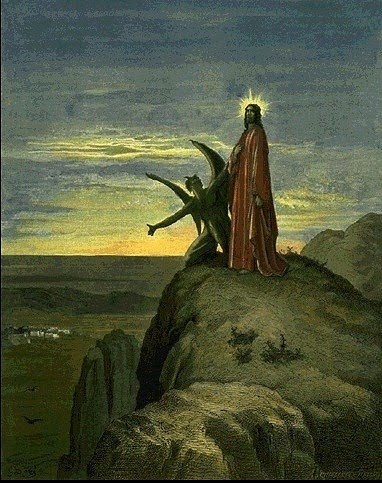
In achieving their living sainthood, they would be in a mystical unity with God during their time on earth.
Fifth Stage of Spiritual Development: Mystical Unity
This is the final stage of theosis where an individual is in such close unity with God that they are able to discern the will of God at a rate inconceivable by most. Some faithful are able to do so in short bursts of spiritual ecstasy, and most are only capable of God's will after the fact, not before. For most, God's omnipresence is perceived only in silence.
These individuals - these living saints - need not rely on emotional music and gathering to invoke a feeling of spirituality. In total silence, they are able to discern the will of God. It is known that St. John Paul II would habitually be in verbal conversations in Eucharistic chapels, and those around praying with him would feel only moments pass away when in fact they were with him for hours.
The living saints also at times perceive time in a quite different manner. Every event they perceive, every person they come across, they are able to peer through the past, present, and potential futures.
I suppose I can only note what we ought to learn from them as opposed to how they are like for I have no first hand exposures to them. The lesson is to set the goal of spiritual development to where they have been. Their rational faculty of the soul was as aligned as they could be on this corruptible world with that of God's perfect Reason, Logos, the Word. To be one with the Word of God in all respects through belief, perception, adherence, and self-mortification as much as we possibly can is the aim of our lives. Thus concludes my observations and accounts on stages of spiritual development.

These individuals - these living saints - need not rely on emotional music and gathering to invoke a feeling of spirituality. In total silence, they are able to discern the will of God. It is known that St. John Paul II would habitually be in verbal conversations in Eucharistic chapels, and those around praying with him would feel only moments pass away when in fact they were with him for hours.
The living saints also at times perceive time in a quite different manner. Every event they perceive, every person they come across, they are able to peer through the past, present, and potential futures.
I suppose I can only note what we ought to learn from them as opposed to how they are like for I have no first hand exposures to them. The lesson is to set the goal of spiritual development to where they have been. Their rational faculty of the soul was as aligned as they could be on this corruptible world with that of God's perfect Reason, Logos, the Word. To be one with the Word of God in all respects through belief, perception, adherence, and self-mortification as much as we possibly can is the aim of our lives. Thus concludes my observations and accounts on stages of spiritual development.
Subscribe to:
Posts (Atom)